Games I Played in 2025 [2025-Dec-15]
Hello, 2025 is coming to a close, and as with last year I want to summarise my feelings on the video games I played this year. I'm changing the format somewhat, including new sections on the multiplayer games I put the most hours into, and a couple of smaller games which it didn't feel right to rank. The main list consists of all the games I got at least one primary ending in, ranked from least to most favourite.
This year for me was dominated by visual novels, I'd never actually given them a proper try before so I was quite surprised by how much I've enjoyed reading them. This has mostly been an extension of the running theme this year, which is me getting seriously into the BL genre, which doesn't really exist out of primarily reading works, barring some live action television shows I simply do not care to check out.
As with 2024 I've kept up playing fighting games, attending my local scene weekly for the entire year, although I haven't been taking them particularly seriously. I enjoy sparring and learning new characters and games much more than I enjoy labbing or drills, which means I'm having fun but not improving by much. This largely reflects a re-ordering of my priorities: I play videogames for fun, and any time wasted learning them could be better spent in drawing and writing, or picking up new skills entirely.
Outside of the following list, there are a handful of singleplayer games I put some hours into, but did not complete, primarily Cyberpunk 2077 and Nier: Replicant. Cyberpunk is fun, but a bit tedious. The combat sucks and the story is slow (though it's had some decent moments), with most of the enjoyment coming from the open world. In a way it feels like the perfect successor to Skyrim, which I intend as a backhanded compliment. Nier is strangely similar for such a different style of game. I don't care much for the story or characters, and the combat is genuinely dull, but the atmosphere is very good, and I like its weird gimmicks. Perhaps both of these games will appear on my list next year.
--- MULTIPLAYER ---
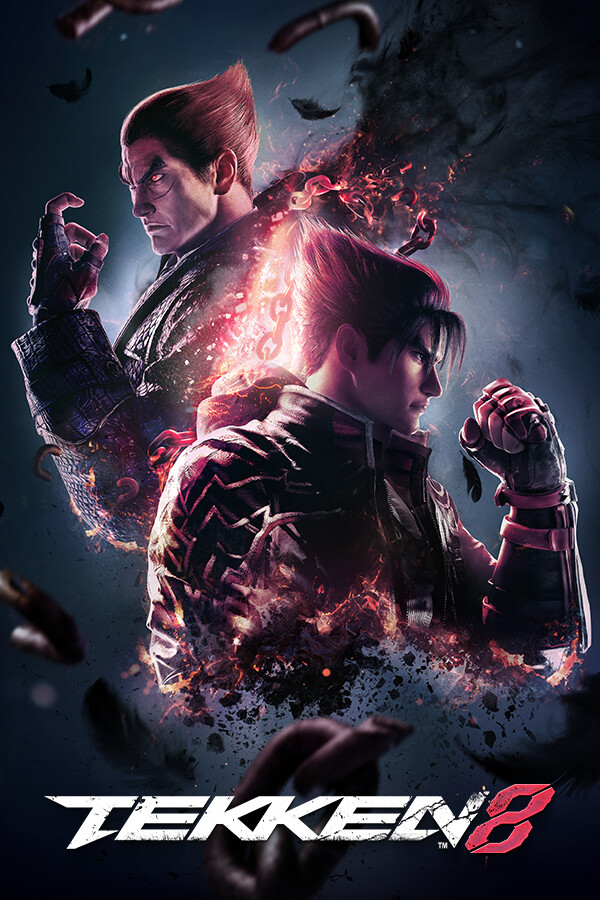
Tekken 8
Genre: Fighting Game
Original Release: 2024
Platform: PC, PS5
I'm learning more and more that I prefer 3D fighting games over 2D in most cases, they're usually slower, more generous with their inputs, and for some reason they almost always have an androgynous blonde European boy who does Chinese martial arts. The slowness is good because I do not have quick instincts; I need time to think and consider what I'm doing, and Tekken really lets me do that. I always find myself far more focused on my strategy and positioning than in 2D games, where I all too often resort to mashing in desparation lest the other player do a 17 hit combo that leaves me twiddling my thumbs for the next 10 seconds.
Oh right, the bit about boys. Tekken 8 has Leo Kliesen, who is not a boy (canonically their gender seems to be "Leo") but they do follow in the footsteps of Lion and Eliot from Virtua Fighter and Dead or Alive respectively (also arguably Bridget), so they count. Leo has a fun playstyle with a lot of evasive moves and three pretty useful stances that all flow into each other. I still suck with Leo, and Tekken in general, but learning how to weave in and out of attacks and do a couple of decent combos has been really fun. Tekken 8 also has really sick music, yippee.
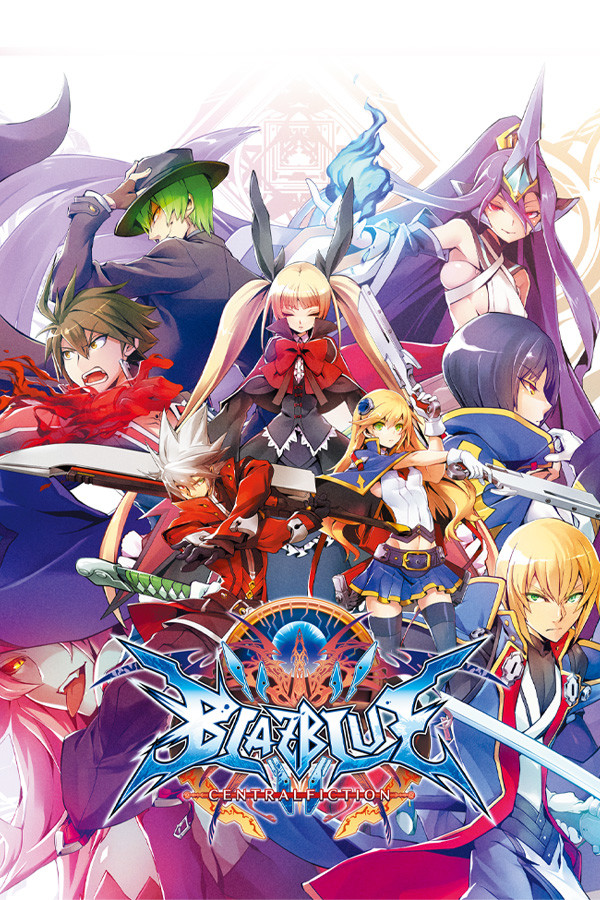
BlazBlue Centralfiction
Genre: Fighting Game
Original Release: 2015
Platform: PC, PS4
I feel like I'm really picky with my 2D fighters. Most of them feel too fast and unforgiving for me to actually enjoy them, but every now and then I find one of "those characters" and I am compelled to learn some shit I'd never have looked at otherwise. Case in point: Amane Nishiki.
So Blazblue is the game Arc System Works made when they lost the rights to Guilty Gear and decided to make another one anyway. As far as I can tell Amane is some kind of god-like entity who is forbidden from actually altering the course of history, and is also a 20-something year old effeminate dancer boy. He has long hair, cute makeup, and he has one of the slowest run speeds in the game because he insists on running in the gayest manner imaginable. Good for him. His moves are very graceful and elegant, using a mixture of slaps (also looks gay) and a long, shapeshifting scarf that he uses for long ranged attacks, or twisting into a drill. He's fun for three reasons: 1) He's insanely mobile, having up to three jumps alongside floaty movement and options to drop out of the air very fast. 2) His long scarf can hit from halfway across the screen and easily combos into moves that build up his drill, speaking of which. 3) He can perform a series of drill attacks, which all do insane chip damage that increases the more often he uses them. At his best he can chunk off like a quarter of your health bar with one attack WHILE YOU'RE BLOCKING. I said I had 3 but 4) His ultimate move turns your opponent into a ridiculously cute younger version of themself, instantly winning the game. He's lovely and pretty and everyone seems to hate playing against him.
Blazblue has other characters (not that I'd know) that all have weird unique mechanics. I find a lot of the art pretty boring, and the music isn't anything special, but it's becoming one of my favourite 2D fighting games, and I'm learning a second character as well so it's not just my biases talking!
--- RANKED LIST ---
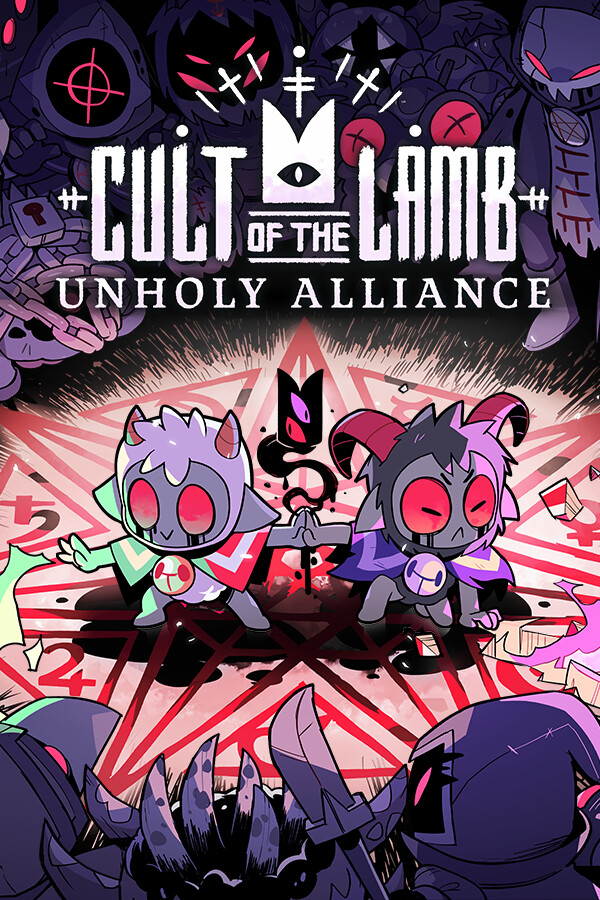
Cult of the Lamb
Date: April - June
Genre: Roguelike, Management
Original Release: 2022
Platform: PC [steam deck]
There's this very particular tone I like in media that is strangely difficult to find, I'd describe it as simultaneously genuinely cute yet very dark. When done well the two don't just balance each other out, but enhance themselves; horror feels all the more impactful when contrasted with soft warmth, and that warmth gains an extra layer of comfort when it becomes an escape from that darkness. It shouldn't be surprising then that my favourite part of Cult of the Lamb was it's tone.
The adorable art style, cute character designs, and lovely music stop an otherwise extremely dark setting from feeling overly edgy, and it makes for a feeling I don't think I've seen in any other game. You play as the last sacrificial lamb, given a second chance at life by a fallen god on the condition that you build a cult to gain the power required to kill the existing pantheon that doomed you to sacrifice in the first place.
You build this cult in two gameplay loops: a roguelike dungeon crawler which gives you followers and loot to spend in a base-management segment, which in turn gives you upgrades for your crusades. It's kind of like Animal Crossing if instead of picking up rocks and sticks you had to play a round of Hades, ableit in simpler loops than either. The combat is fun and fast, with enough range of weapons, abilities, upgrades, and enemies to stop it from feeling stale, though there isn't much depth to be found here. Most of what you're doing is simply hitting enemies and rolling out of the way of their attacks. I found the base building to leave a little to be desired, there's a lot of micromanaging you can do as you gain more cult members, rituals to complete and buildings to upgrade, but they don't live long and it never really feels like you can grow attached to anything.
If there was one thing I could change about this game, it would be making the days something like twice as long. As it stands, all my daily tasks (a crusade, a sermon, indoctrinations, and some general maintainence) took me more than an in-game day to complete, so I always felt like I was rushing around. Every moment I wasted micromanaging your cult felt like a moment I could have spent crusading to find followers to replace the 3 or so who will inevitably die this week. As a result there was never enough time to really form a bond with anyone or develop my base past "good enough".
Despite my gripes, I think this is a very well made game. It's best played in short bursts (perfect for a Switch or Steam Deck) and the cute style and fluid combat make for a very pleasant game-feel. Even just listening to the Lamb's bell ring as they walk and watching the smug faces they make swinging an axe are enough for me to recommend the game. It's nice.
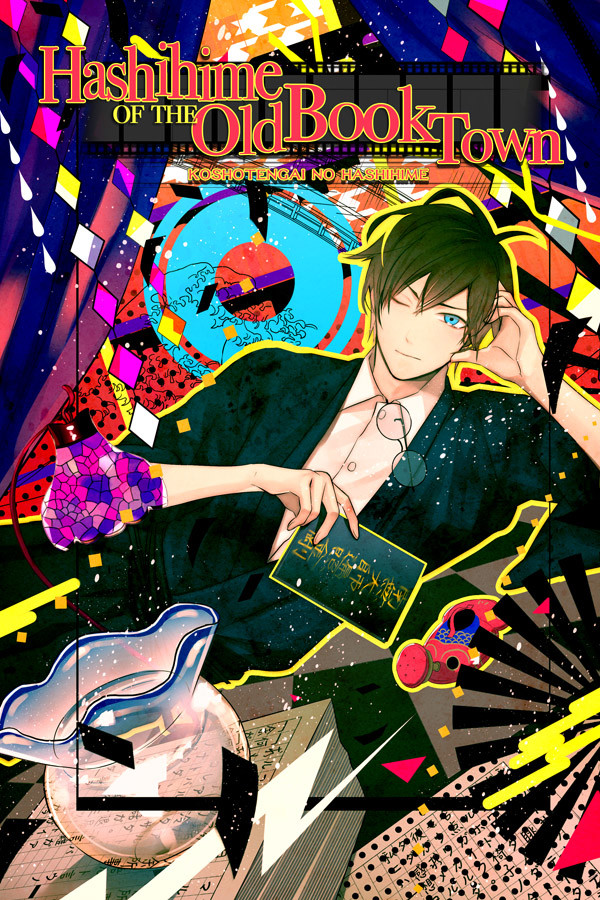
Hashihime of the Old Book Town
Date: October
Genre: Visual Novel, BL, Mystery
Original Release: 2016 [original], 2019 [translation]
Platform: PC [steam deck]
It seems to be rare that I finish a visual novel and immediately have a fixed opinion on it. Hashihime is absolutely one of these cases, a story that I went back and forth on for weeks before deciding that I do quite like it.
Hashihime of the Old Book Town is a story about Tamamori, a young man in the 1920s who moves to Tokyo with his two best friends to study at the imperial college, only to fail his entrance exam two years in a row, and end up working in a weird used book shop that only opens during the rain. He's listless, spending his days lazing about and writing dreadful manuscripts that only his friends will read, until one day one of them dies mysteriously, and Tamamori finds himself stuck in a three-day time loop. It's hard to say more than that without going into spoilers, as this is primarily a mystery game, but it uses its premise to explore the nature of stories. Various pieces of classic (mostly Japanese but some Western) literature from the early 1900s are referenced both by characters and by homage.
I'll start with the negatives, as they were my immediate impression upon finishing the first few routes. For a BL visual novel, there's not a lot of BL, and it's not much of a visual novel. It's linear, first of all, almost entirely. The first playthrough has zero player choices from the start to the credits, with choices only being available on your subsequent playthroughs, all of which are a binary choice of "go to this ending or stay in the common route until the next choice", which means that most players are going to see the exact same events in the exact same order. This is fine but it's better to know going in. As for the lack of BL, this game released on Nintendo Switch so I'm pretty sure they made all the h-scenes largely inconsequential so that they could be trimmed down for that release, because Nintendo doesn't want you to see boys having anal sex for some nefarious reason. There also isn't much romance in most of the routes. It's vital for one, but you could fairly easily write it out of the other routes without having much impact. Ultimately the gay stuff feels a bit superfluous, like it's just candy being dangled in front of your face so that you read the actual story, which again, is fine, but is disappointing if you were expecting a romantic story.
The game has some issues with presentation too. The music is fine, it's there. None of it loops well, but it's got a unique sound and there are a couple of tracks I like. It does add something, you'd be missing out somewhat if you turned it off, but it's nothing special. The art is a bit mixed. I really like the character portraits; they're expressive and I think it's very smart how they're all posed to hold umbrellas without it looking weird when they're empty handed. The characters do look pretty similar, not helped by them almost all having the same shades of pale skin, black hair, gray eyes, and black and white clothing, but I never had much trouble telling them apart. Backgrounds are a bit of a letdown. They have odd textures and wonky perspectives, and they do look quite cheap. Hashihime has quite a lot of CGs, which are generally pretty good and service the story well. It has some very vivid and abstract ones that I would rave about if there weren't so few like that, it almost feels a waste to develop that cool psychedelic style and then almost never deploy it. On a more positive note, the CGs for the h-scenes are pretty good. There's a lot of them, way more than you get in a Nitro Chiral game for example, with several per scene. They do feel a bit weightless though, as do any CGs depicting violence. I'm not a good enough artist to explain exactly why, but they lack impact, and look too soft and floaty.
Negatives aside, what do I like about Hashihime? Mostly the writing. This is a very interesting story with interesting characters and which is all written very well. Tamamori himself is great. He's the perspective character and he's genuinely awful. He's selfish, cruel to children, bad at writing, he's rude, he takes his friends for granted, and he even wears fake glasses because he thinks they make him look smart. Yet despite this he's very compelling, and right from the start I wanted to see him grow and be happy. He's obviously totally out of touch with his emotions - making him a very unreliable narrator - and watching him grow to understand himself and his friends is the biggest joy of the story. The prose is from his perspective, and the story trusts you to be able to tell when he's just wrong about something. As an example, after his friend dies the prose still refers to him in the present tense, even right after Tamamori sees his corpse, as he stubbornly refuses to accept that he died. Tamamori is also frequently wrong about his own emotions and desires. It's a pretty mature style of writing that really demands you pay proper attention.
The story itself is pretty solid. Each of the routes explores a different primary genre (romance, mystery, adventure, and sci-fi), which gives a surprising amount of variety to a story that is mostly limited to the events of three days, contained within a handful of locations. There are a lot of good twists, mostly relating to the characters. Everyone in Hashihime has a host of secrets, most of which won't get uncovered in every route. It takes a long time to get the full picture of why each character is the way they are, and the story does a very good job at hiding all these secrets without ever making characters act inconsistently or nonsensically.
There are some really good twists in this story. Obviously I don't want to spoil any of them, but I'll say there were some developments in some routes that I found completely wild and disorienting, making me question literally everything I thought I knew about not just the characters involved, but the nature and even genre of the story itself.
The only fault I can really give the story is that by virtue of being about a time loop it gets pretty repetitive at times. There's one scene early on where Tamamori goes to the cinema to meet somebody. The sheer number of times you see that cinema in different loops and different routes is sort of mind numbing, and that's just one example. It makes some character moments frustrating too, as Tamamori finally makes progress getting somebody to trust him or open up, only for the time loop to reset and all of that progress evaporates into the ether. I get what it's going for; it's clearly evoking a sense of frustration and hopelessness on purpose, but it can feel pretty anticlimactic, like you're just spinning your wheels, not making any tangible progress.
Really I think my problems with Hashihime stem more from my expectations than any actual failing of the game itself. It's a really interesting and unique story with great characters, and now that I've been finished with it for a while it still crosses my mind surprisingly often.
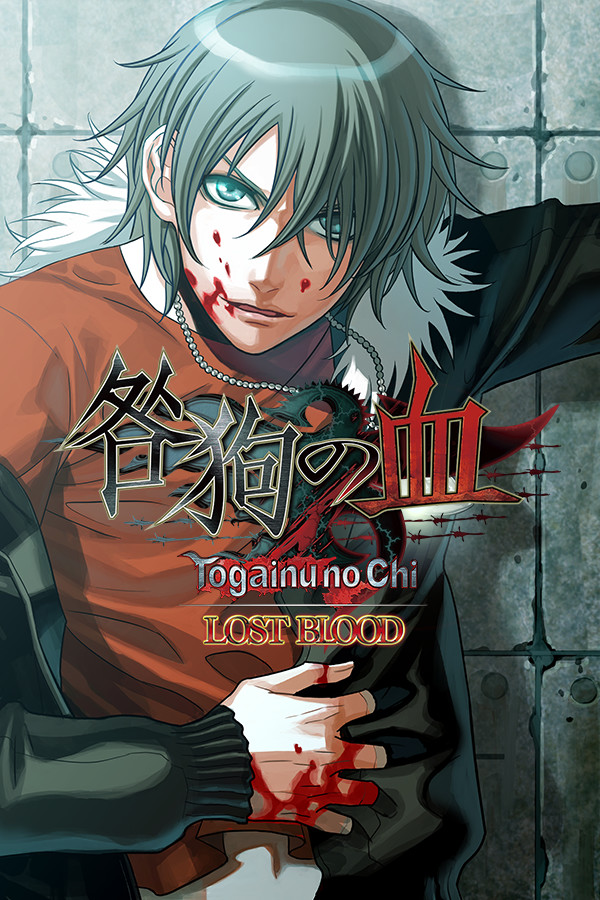
Togainu no Chi ~Lost Blood~
Date: March - October
Genre: Visual Novel, BL, Action
Original Release: 2005 [original], 2020 [translation]
Platform: PC [steam deck]
Togainu no Chi is a dark BL visual novel from 2005, and is the first game released by Nitro+CHiRAL. The setting is bleak, a near apocalyptic Japan torn apart by the last war, full of young men raised as weapons before being released to their own devices at the war's end, left to stumble aimlessly through life knowing nothing except how to hurt each other. You are Akira, a man falsely accused of murder who is coerced into a near-suicide mission to kill the most powerful man in Toshima, which is a lawless place home to the death game "Igra" which you ultimately participate in.
In terms of presentation it is rough around the edges, which was hard reading it straight after DRAMAtical Murder. The CGs look great but the character portraits are quite wonky, and the prose is a bit strange for a visual novel, being written entirely in third person and past tense. The music is messy too (and super edgy), but some of the tracks really hit right and I do find my emotions stirring whenever I re-listen to it. It's very clearly a product of its time, but that shouldn't put you off; it has a lot of character and the spotty exterior covers a fascinating heart.
The game hails from a time where BLVNs were trying quite hard to not come across as merely dating sims (even if structurally that's exactly what it is), which Togainu no Chi achieves by having a dense and convoluted plot, and extremely dark subject matter. Within the first couple of hours you will see drug abuse, gore, murder, sexual assault, slavery, and more! It could easily come across as immature and edgy, but for the most part I think it actually handles it pretty tactfully. Even the "screwdrivers ending" wasn't as explicit as it could have been.
The biggest issue I have with Togainu no Chi isn't the subject matter, but rather its structure. Unlike some other VNs where the common route will end before branching off into separate character routes, here the character routes are woven into the common route, which means that after the first play through you'll have new and old scenes mixed together. It messes with the pace when a new scene is followed by one you've already read three times and just want to skip through. There's also the issue of repeated information, as all but one of the routes has a very similar confrontation at its end. This doesn't exactly ruin the story, but it does take the impact away after a while.
I can overlook all of this though, because the characters are great, and the tone is really cool. I really liked how Keisuke's route explores the way men often ruin their relationships by never talking about their feelings. Motomi shocked me with how much I ended up liking his character, given how little I care for his design and the general archetype of the older pervy guy. Obviously I like Shiki because he's tall and a bit feminine and really mean, but of the main four Rin stands out to me the most. Without giving too much away, his route has the least to do with the actual plot and spends most of its time on his character. He's cute and flirty but he harbours intense trust issues that come out in very unflattering ways. It comes across as very believable and deeply sad, and I see a little too much of myself in him. That's probably why upon finishing his route I cried for the next two days.
As the studio's first go at a BLVN, Togainu no Chi is astonishing, and its influence in the genre is clear. It's definitely flawed in its art, writing, and structure, but they're never quite enough to hold it back from being great, it's truly a classic.
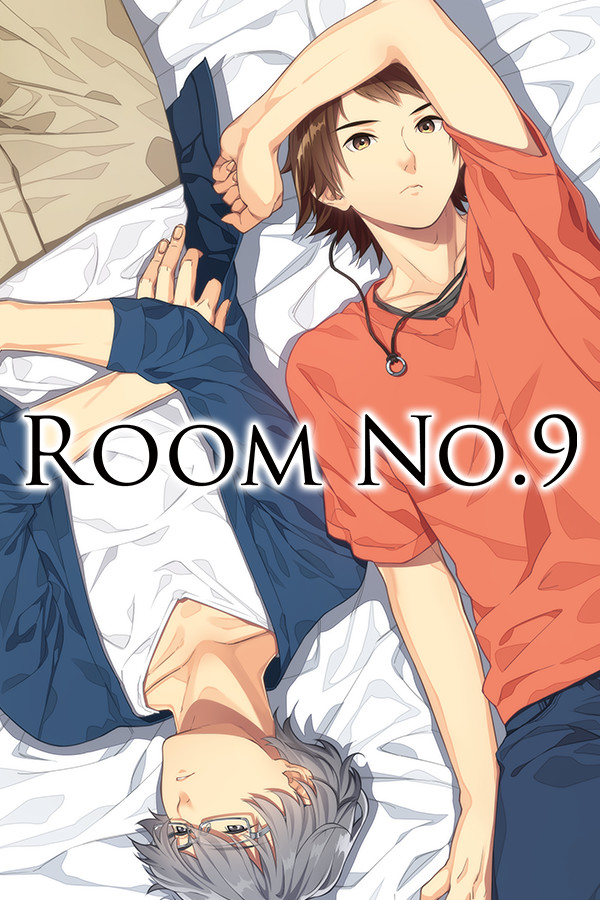
Room No. 9
Date: July
Genre: Visual Novel, Yaoi
Original Release: 2020
Platform: PC [steam deck]
I cannot stop thinking about this game. In trying to summarise my feelings I've gone from loving it to hating it to thinking it's a flawed masterpiece that reaches incredible highs but fails to deliver on so much. I have spent hours trying to gather my thoughts about what works and what doesn't, and at this point I'm forced to admit that at the very least, Room Number 9 is one of the most interesting games I've ever played.
The premise is simple: Daichi and his childhood best friend Seiji are on holiday celebrating the end of university when they are both abducted and placed into a social experiment. They are trapped in a hotel room and given a choice of one of two tasks a day, and after ten days they can leave. One task will require Seiji to cause physical harm to Daichi, and the other will require Daichi to perform increasingly degrading sexual acts on Seiji. Surely a scratch on the arm is preferable to giving your best friend an awkward handjob? But what about a 100x8mm incision? How far are you willing to degrade your friend to save him from the guilt of hurting you? What will you do when you find yourself enjoying something you'd never imagine wanting?
This is one of those games that demands you bring a lot of yourself into it. You really have to place yourself in the positions of the characters, and I think a lot of what you get will depend on your own identity, lived experiences, and trauma. To me, this means the psychological horror angle is extremely compelling, focusing on both the trauma of being a victim and an unwilling perpetrator. This is precisely where I was disappointed, however. Visual novels are defined by their choices, but you only get to choose which tasks your protagonists pick in the last few days, and the ones they do pick are almost always sex. If you want an exploration of pure sadism and masochism, then this probably isn't the game for you. There is MUCH more sex than violence, and the purely violent scenes are pretty tame (bordering on cute if you ask me) and don't leave much of an impact on the characters. The sex also isn't as extreme as the game's description makes it out to be, and there's only a few scenes of it that really unsettled me.
Fortunately, the sex scenes themselves are mostly very good (unusually realistic too), going from awkward to adorable to deeply uncomfortable. Easily the most interesting part of the story is in watching how either character cracks under the increasing intensity, seeing how they begin to view each other differently as they dig deeper. This is perhaps the strongest aspect of the game, capturing that specific feeling of wanting something you know is bad, and of fighting not to give into those desires. The worst endings of the game show you what happens if you let those feelings consume you, the sex stops being exciting and grows dull, then disgusting. I found one ending in particular so disturbing that by the time I was done, even thinking about sex felt gross. It's impressive. It's not all grim though, between the discomfort are glimpses of excitement, and even happiness. These flickers giving you drive and hope that maybe something positive can be salvaged from all the suffering.
While a big appeal of this story is watching two cute boys grow a taste for each other's bodies (whether they want it or not), you shouldn't go in expecting any romance. This also disappointed me at first, but the more I think about it, the more I have to respect the game's intent to deny you the fantasy, these characters are too repressed and too terrified of their feelings to truly accept any uncomfortable emotions they find along their journey, and there are no truly happy endings. It makes sense, I can't imagine anybody coming out of 10 days of terror and forced mutual abuse with a healthy relationship to what it taught them. It took some time for me to see, but the fates of these boys were already sealed at the start of the first day, everything else was just damage control.
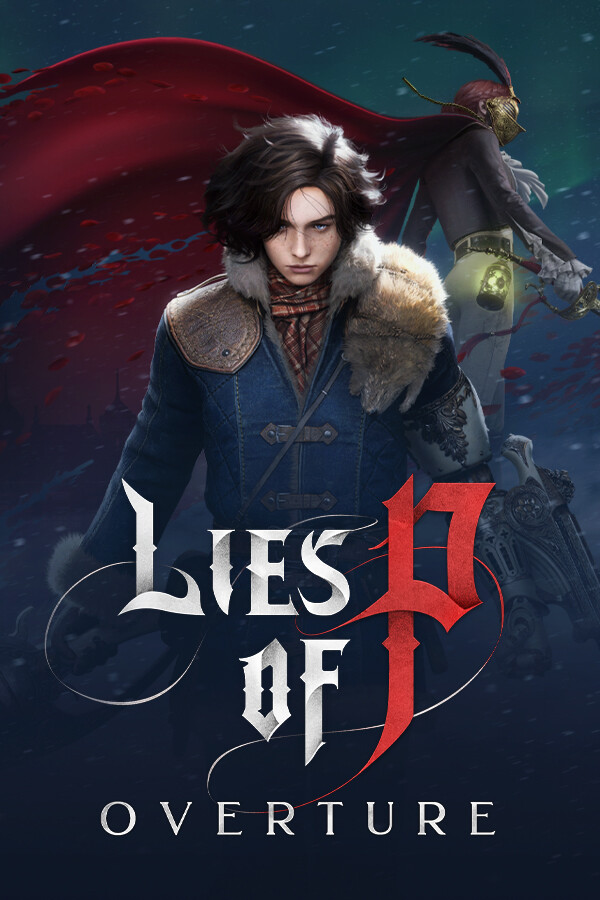
Lies of P: Overture [DLC]
Date: June
Genre: Soulslike, Steampunk
Original Release: 2025
Platform: PC
The original Lies of P is probably my second favourite game of all time, so obviously I was very excited to try Overture after it was announced. Once the DLC came out I started a new playthrough up until the ninth chapter, where the DLC is unlocked, and proceeded into the new content. Quickly I learned two pieces of critical information: 1) Lies of P: Overture is significantly more difficult than the base game, and 2) the intended experience is to play the DLC after completing the base game. It's really difficult, substantially moreso than the original game ever was. The zoo at the start - which is an excellent location by the way, I love when games get winter expansions - begins with a long walk down a hill, up a dried riverbed, through the front gates of the zoo, and then ends with a miniboss-fight. At no point in this journey do you get a single checkpoint, and I died several times at the first enemies, and in most attempts by the time I reached the miniboss I was already on death's door. This is only the second checkpoint in the DLC.
So it's difficult, yes, and I made it more difficult by myself by being stubborn and impatient, but that difficulty is very welcome. For most of the original Lies of P I was only truly tested by the boss fights, and not the connective areas. Overture isn't all that long, only five chapters compared to the original 11, but they're difficult enough that it won't feel quick. It's not cheap, pointless difficulty either. You're forced to fully learn the game's mechanics, as it will heavily punish you for slipping up. It took me dying in one hit dozens of times for me to realise that my health pool was too low, even though I could get away with that in the main game. I also had to get a lot better at recognising and exploiting attack patterns, as enemies often have long strings with heavy damage, so you can't get away with as much spamming as before.
Difficulty is not the reason I keep coming back to this game though, the main draw has always been the world, which is better than ever here. There aren't as many standout locations this time around simply due to the smaller scope, but those locations you do see are of a very high quality. The zoo is a highlight, eerily quiet and covered in snow, and full of weird and horribly mutated animals. It's unlike anything in the base game in terms of looks, and I particularly love the greenhouse. Other highlights include a mazelike frigid underground base (which I dread to return to), and a coastline littered with shipwrecks and bathed in aurora. I wish I could say more about the bosses without spoiling them, all I can share is that they're as good as the original game's best, and the 2v1 is maybe my favourite bossfight ever. There's cool new weapons too! They're mostly quite mechanically involved, like a bow you unlock near the start which I could never really figure out, or a spear with a rocket engine on the back that lets you dash around the map at ludicrous speed. None of them are as cool as the gunblade though, which has an incredibly sick combo system where after any attack that fires the gun (including finishers and fable arts!) you can hold the heavy attack button to launch yourself towards your opponent and maintain your offence.
Gameplay aside, Overture's story keeps the same subtle, tragic tone as the base game, using the time travel setup to leverage dramatic irony while also bringing closure to some of the questions left unanswered by the end of the original story. You can't save these people, but maybe you can bring some meaning to their ends, and echoes of their beauty will live on into the future, even if you're the only person who will recognise it. If you liked Lies of P you should play this, it takes everything good about the original and just expands on it.
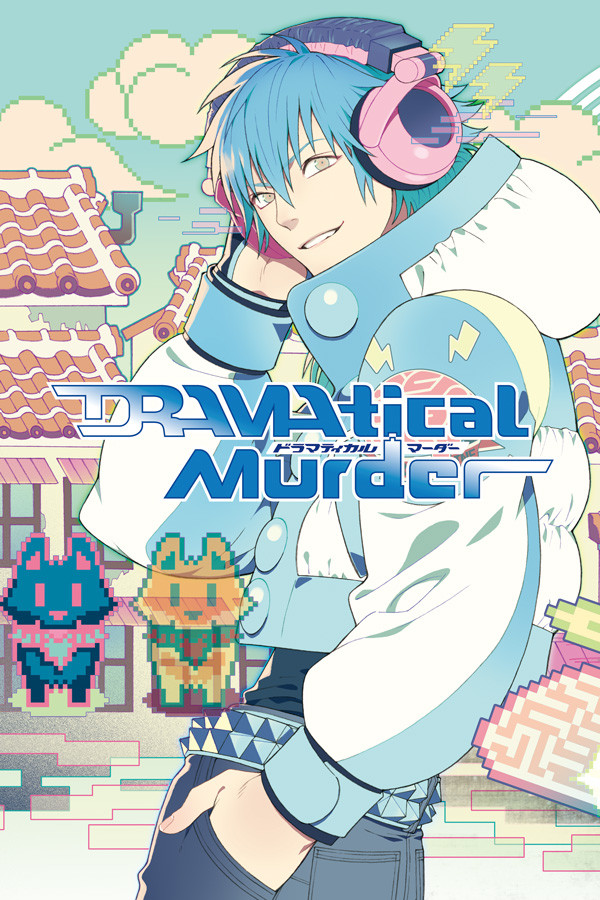
DRAMAtical Murder
Date: January
Genre: Visual Novel, BL, Science Fiction
Original Release: 2012 [original], 2021 [translation]
Platform: PC
Notes: using patch from Jast Blue
I've gone back and forth trying to summarise my exact feelings for this game several times now, never being quite satisfied with the result. I won't be able to say everything here, but perhaps one day I'll make a longer writeup. Regardless, this game had a shocking huge impact on me and my life, and playing it in January really set the tone for the rest of the year. I suppose I should start by describing what exactly it is.
DRAMAtical Murder is a 2012 science fiction/boys' love/yaoi visual novel. It famously breached containment in the early 2010s after receiving an unofficial English patch, exposing it to a massive audience on social media (particularly Tumblr) and making it easily the most well known Yaoi game in the western hemisphere. It got an official English translation in 2021 alongside a slew of other acclaimed BL visual novels also translated around the same time, probably all owing their localisations to the demand induced by DRAMAtical Murder's unexpected popularity. Talking much about the story of DRAMAtical Murder without quickly getting lost in spoilers is a bit tricky, but the general premise is a science fiction mystery story about young adults living in the shadow of a powerful corporation. Aoba Seragaki is a twenty-three year old working in a junk shop on the fictional island of Midorijima. He lives in the Old Residential District, the remains of the original settlement on the island before it got bought up by the Toue Corporation, who proceeded to erect a massive resort for the ultra-rich and wreck the economy and lives of the locals. Alongside four distinctive and colourful pretty boys, he unravels a conspiracy involving a string of disappearances, psychic weapons, and corporate secrets, while he and his romantic interest discover more about themselves and their traumas.
A lot of its popularity is owed to its extremely good production, with immaculate and colourful art, an excellent and well-implemented soundtrack, and very slick user interfaces. All the elements of the design integrate together very seamlessly, it feels more professional and complete than basically any other visual novel of its character. After playing other BLVNs by various developers, my mind is consistently blown when I return to DRAMAtical Murder. It's the simple things, like seamlessly looping music, or in-world user interfaces animating on screen. Even something as simple as character portraits changing expression mid-voice-line elevates it above its peers.
There is plenty of genuine quality beyond the surface level though, with some great characters and a good central mystery. It withholds a lot of information in each route, with the full picture only becoming clear after completing each of the four main ones and progressing to the final, secret route. The highlight of the writing is definitely the romance though, which makes sense given that it's a Boy's Love game. Each character is fun and distinctive, but holding some key trauma that comes through in their personality which gets explored as the story progresses, with that in turn revealing aspects of Aoba's personality and history. You've got Koujaku doing the tried and tested childhood best friends dynamic, Mink exploring sadomasochism and victimhood, and Clear being very cute but surprisingly tragic. Noiz ends up being the high point for me though. His defining character trait is his physical numbness, being almost entirely unable to feel pain or pleasure in his body. It bleeds through to his apathetic and thrill seeking personality, which forces Aoba to be proactive as he tries to support somebody who utterly refuses help. He's also very provocative, owing to his lack of self-preservation instincts, which means that he and Aoba have a lot of good friction. I think he hits particularly hard for me because I know what it's like to feel hopelessly numb, and to hurt those around you when you hurt yourself.
Something else Noiz's route excels at is the H-scenes. Sex is extremely important to all the routes, which makes me very happy. I'm too used to sex being tacked on at the end of stories for a bit of cheap fun that can be safely cut out for console releases, I feel it reflects a broader culture of seeing sex as meaningless and crude. Nobody actually believes that though, sex is extremely important to the human condition, with it being widely considered the most significant thing you can do with a person other than like, killing them. As such it's extremely cathartic for me to see sex used to progress the story and deliver important character beats, and it only helps that they feel genuinely intimate and erotic.
I was enjoying DRAMAtical Murder before I reached any of the H-scenes, but the sincerity and competency of them really pushed this visual novel to being one of the most memorable experiences I've had with a story. If I'm totally honest I could point out some flaws and shortcomings in the game, but they can never detract from what it means to me. It introduced me to an entire new genre and a new medium, but more importantly it gave me a new wave of creative drive. Since finishing the last ending I have obtained a new interest in writing romance, which has led to several tens of thousands of words worth of writing I've produced in just this year (even if most of it isn't good enough for me to share yet). More significantly though, the excellent artwork drove a newfound interest in depicting the human body. I've always enjoyed drawing anatomy, but I never took it this seriously before. This year I started doing real studies with focus and consistency, leading to dramatic improvements in my ability to draw and render. Perhaps it's embarrassing to admit that a decade old yaoi game has impacted this many facets of my life, but it pushed me to write more, draw better, and even start reading paper books again. In a way, almost every game I've played, every story I've read or written, and every drawing I've produced this year were because of this game, so I cannot place it anywhere but the top of my list. This was one of the most profoundly impactful experiences I've ever had with a piece of art.
--- OTHER ---

D.Nd: Poisoned
Date: November
Genre: Visual Novel, BL
Original Release: 2004
Platform: PC
So a lot of you probably know this already but people were weird about Death Note twenty years ago. The landscape of fan culture was extremely different than it is now, mostly due to accessibility - let me explain. These days if you want to participate in fandom, all you need to do is search a few terms on Twitter, Tik-Tok, or whatever other evil bit of brain-rotting malware people are using these days, and you will be fed a steady stream of low effort art, meme edits, and relatable text posts about your favourite intellectual property. There's even a website that hosts garbage in-universe trivia about every game, anime, and TV show under the sun.
This was not the case in 2005. If you liked Death Note then you couldn't do shit about it. Most people didn't have the internet and it was exceedingly difficult to get your hands on most manga or anime because it simply hadn't entered the broader public consciousness. That meant that if you really liked something, you had to put in a lot of effort, so the online and offline spaces centered around particular media tended to have a lot of very passionate and actively-minded individuals. Because online commission artists and crowdfunding were largely unheard of back then, art got made because people wanted to, and it was generally a lot less cynical.
I need this long preamble to explain why I find D.Nd: Poisoned so fascinating: it's an extremely low budget visual novel built in RPG Maker and based on Death Note, made before the anime had even started airing. The setup is simple, following Mello and Near before they leave the orphanage, covering three days as the pair are assigned to a project together in the hopes of getting them to be able to cooperate and understand one another. It's a fun premise, and it goes in interesting directions. The writing is really solid, especially the more subtle character writing for the protagonists. Mello feels genuinely unstable and totally out of touch with his emotions; it's really interesting watching him try to convince himself he's in control and understands what his feelings are. Near is a great foil, as he was in the original story, initially coming off as very reserved and in control. You get the sense that he's extremely stable and rational, but increasingly you see how he uses rationality as a way of ignoring his own feelings, which are in reality often extremely intense and inhibiting. The art is also really solid. It's cute, expressive, and matches the original style well while also having its own distinct look.
I do have to criticise the actual gameplay. There are 10 possible endings, but in a blind playthrough you'll almost always get the same one. I made totally different decisions in three different playthroughs and got the same ending every single time. Please look up a walkthrough if you're at all interested in playing this game, there are dozens of choices in this game (including weird shit like entering rooms in specific orders) and if you don't make 100% of the correct choices for a given route you're gonna get filtered into the common one every time! With that aside, I do think this is worth playing if you have a history with Death Note and enjoy this particular ship, as it gives a really interesting window into the original western fan culture around it.
I didn't have anywhere to put this, but the game uses the fan-accepted colours for Matt, giving him red hair and green eyes instead of brown and blue. This was just the broadly accepted colour scheme for him as no media had been released by this point that actually showed him in colour. To this day you'll still occasionally see people drawing him like this! I think that's really interesting, and you rarely see stuff like that in fandom these days.

DRAMAtical Murder re:connect
Date: November - December
Genre: Visual Novel, BL, Science Fiction
Original Release: 2013
Platform: PC
DRAMAtical Murder is fucking back!!! They made more of it. Reconnect was released a year after the original game, and is essentially an expandalone or DLC; same engine and UI, same team, but new content. The game contains ten epilogues (a good and a bad one for each character route) plus some extra content, and serves to tie up each of the game's endings.
When I first read DRAMAtical Murder I didn't think anything about the endings felt rushed or incomplete, but this game builds on each one so naturally and meaningfully that I would consider this essential reading if you liked the original. It is genuinely surprising how much the new writing (which is easily on par with the old) expands and adds to previously complete characters, and each route contains an extra H-scene too, how lovely.
Nantala Kantala returns for the art, which is just as good if not better than the original. She's matched the style of the original perfectly, but her sense of proportion seems even better than before, and some of the wonkier looking sprites and art in the original endings (looking at you Mink and Noiz) has been significantly improved upon. Also returning is GOATBED on the soundtrack. Accompanying the original score are a dozen or so new tracks which fit in well, but have a slightly distinct sound shared between them. Compared to the original they feel more dreamy, with softer sounds and a lot more reverb. BGM 02 is particularly amazing, I'd heard it before on the official soundtrack, but the version in-game has some additional layers that make it feel so weird and glitchy and good. It fits the whole feel of DRAMAtical Murder so well that it's shocking it wasn't in the original game.
I want to touch on the new H-scenes too; there's a lot of them by volume (half the routes having two scenes depending on your choices) but they're pretty different from one another, and mostly do a lot of character work. The way Reconnect uses sex is actually more interesting than in the original, with lots of pivotal moments happening in H-scenes, with character beats that would only make sense during sex. Noiz feels like the clear winner here, with his bad route containing some genuinely shocking imagery, and the good route having one incredible scene where Aoba breaks down during some particularly intense sex. A lot of BL seems to treat sex as a cheap reward for having reached the end of a route, it's refreshing to see it deployed creatively and meaningfully. And they use lube now (except for when they don't, and make a point of how bad that hurts), hell yeah.